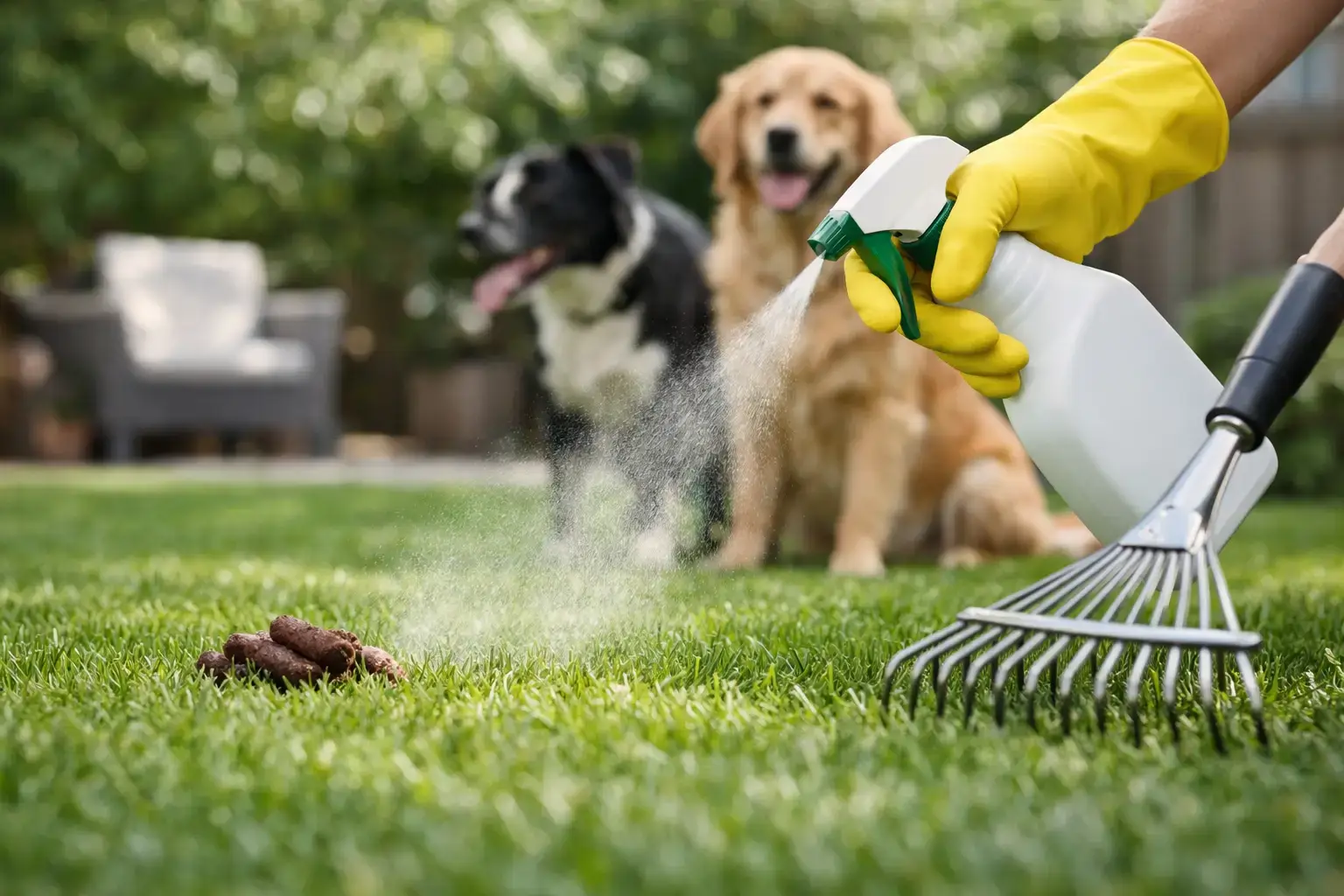
If your backyard smells off even after you pick up the obvious mess, you are not imagining it. Figuring out how to sanitize lawn after dogs usually comes down to three things: removing waste quickly, rinsing problem spots the right way, and staying consistent so buildup never gets ahead of you.
For most dog owners, the real issue is not one bad day in the yard. It is the slow accumulation that happens when life gets busy, the weather turns nasty, or winter leaves behind more than you expected. A lawn can look mostly fine and still be less pleasant to use, especially if kids play outside, guests come over, or your dogs keep revisiting the same spots.
What it really means to sanitize a lawn after dogs
In everyday terms, sanitizing your lawn means reducing leftover waste residue, helping control smell, and making the space cleaner and more comfortable for people and pets. It does not mean turning grass into a sterile surface. A yard is still an outdoor environment, so the goal is practical improvement, not perfection.
That distinction matters because a lot of homeowners overdo it. They reach for harsh products, use too much water in one area, or treat the entire lawn when the real problem is a handful of repeat-use spots. A better approach is targeted and repeatable.
Start with the one step that matters most
Before anything else, remove all visible pet waste. If solids are still sitting in the grass, no spray, rinse, or treatment is going to solve the bigger problem. The longer waste stays in the yard, the more it breaks down into the soil surface, clings to grass blades, and creates lingering smell.
If you have one dog and stay on top of cleanup, this is usually manageable. If you have multiple dogs, a large yard, or a busy household, missed piles add up fast. That is why frequent scooping makes the biggest difference in how clean the yard feels overall. It is also why recurring cleanup service helps many families more than occasional deep cleanup. Consistency beats catch-up every time.
How to sanitize lawn after dogs without damaging the grass
Once waste is removed, focus on the areas where dogs go most often. These are usually corners of the yard, fence lines, or a favorite patch near the patio. You do not need to soak the whole lawn if only certain spots are affected.
Use a garden hose to thoroughly rinse those areas. A steady spray helps dilute residue left behind in the grass and top layer of soil. It also helps with urine concentration, which is often what contributes to burnt-looking patches and stubborn smell. Plain water is often more useful than people expect, especially when used regularly instead of only after the yard gets bad.
Timing matters here. If the ground is already saturated from rain, more water may not help much right away. In dry weather, though, a good rinse can make a noticeable difference. The trade-off is that overwatering can stress certain lawns, especially if drainage is poor, so aim for a thorough rinse rather than creating mud.
Be careful with household cleaners
A common mistake is using bleach, ammonia-based products, or strong multipurpose cleaners outdoors. Those products can damage grass, irritate paws, and create bigger problems than the one you started with. They may sound tough enough to handle pet mess, but lawns are not hard indoor surfaces.
If you use any lawn-safe pet area treatment, read the label closely and make sure it is intended for use on grass where dogs and people spend time. More product is not better. Spot treatment is usually the smarter move.
For many homes, the safest routine is still simple: scoop, rinse, and repeat on schedule. If there is a deeper odor issue, it is often a sign that waste has been sitting too long or too often in the same places.
Why smell lingers even after cleanup
Homeowners often think they are dealing with a grass problem when it is really a frequency problem. If dog waste is picked up only once every week or two, there is a lot more time for residue and smell to build up between cleanings. Warm weather makes that more obvious, but winter can be sneaky too. Snow cover hides waste, then spring thaw reveals a yard that needs serious attention.
Another factor is traffic pattern. Dogs are creatures of habit. If they keep using the same area, that part of the lawn takes the hit over and over while the rest of the yard stays relatively fine. In that case, rotating potty areas can help if your dogs will cooperate. Not every dog will, and that is okay. It just means those high-use zones need more regular care.
How to handle urine spots and worn patches
Solid waste gets most of the attention, but urine can be just as frustrating. If your lawn has yellow spots or thin patches, concentrated urine may be part of the problem. The quickest way to reduce damage is to hose down the area soon after your dog goes, especially in hot weather.
That is not always realistic, of course. If you are leaving for work, getting kids out the door, or letting the dogs out at night, immediate rinsing may not happen. In those cases, focus on the spots that get repeated use and rinse them once or twice a day instead of trying to catch every single bathroom break.
If patches are already damaged, give them time. Some areas recover with watering and normal lawn care, while others may need reseeding. It depends on the grass type, the season, and how heavily that area gets used.
A practical routine for busy households
If you want to know how to sanitize lawn after dogs in a way that actually fits real life, keep the routine simple enough to maintain. Daily or every-other-day waste pickup is ideal. Rinse the most-used potty areas several times a week, or more often in hot weather. Check for hidden piles along fence lines, under decks, and near bushes where grass can conceal them.
For families with multiple dogs, weekly professional cleanup can be the easiest way to keep the yard under control. That is especially true if your goal is not just appearance, but having a yard that is ready for kids, cookouts, or just relaxing outside without worrying about what you will step in.
A one-time cleanup also makes sense after winter or after a period when the yard got away from you. There is no shame in that. Most dog owners have had a season where cleanup slipped down the list.
When the whole yard needs more attention
Sometimes spot care is not enough. If the lawn has widespread smell, lots of missed waste, or months of buildup, start with a full cleanup before doing anything else. Walk the yard carefully and remove every visible pile. Then rinse the highest-use sections first and the surrounding lawn second.
Do not expect one afternoon to erase months of accumulation. You may notice improvement right away, but the yard may need a little time, especially if weather has compacted the mess into the grass. In some cases, mowing after cleanup and watering can help the lawn feel fresher, but only once all visible waste is gone. Mowing over dog poop just spreads the problem.
Seasonal cleanup makes a big difference in Michigan yards
In places like mid-Michigan, winter can create a backlog fast. Snow hides piles, frozen ground makes cleanup harder, and by the time things thaw, the lawn can be in rough shape. Spring is often when homeowners realize they need more than a quick pass with a scoop.
That is where a reset helps. A thorough spring cleanup gives you a cleaner starting point and makes regular upkeep much easier after that. If your yard has been under snow for weeks or months, this is one of the few times when a larger cleanup truly changes the whole season.
The easiest way to keep your lawn cleaner long term
The truth is that lawns stay cleaner when waste does not sit there very long. That sounds obvious, but it is the whole game. Most lingering yard issues trace back to delayed pickup, not some mystery grass problem.
If you can keep up with it yourself, a steady routine works. If you are tired of spending your weekends chasing piles around the yard, that is exactly why services like Get Scooped MI exist. Letting someone else handle the mess can be the difference between a yard you avoid and one you actually use.
A clean lawn does not have to be complicated. It just has to be maintained often enough that yesterday’s mess never becomes next month’s problem.