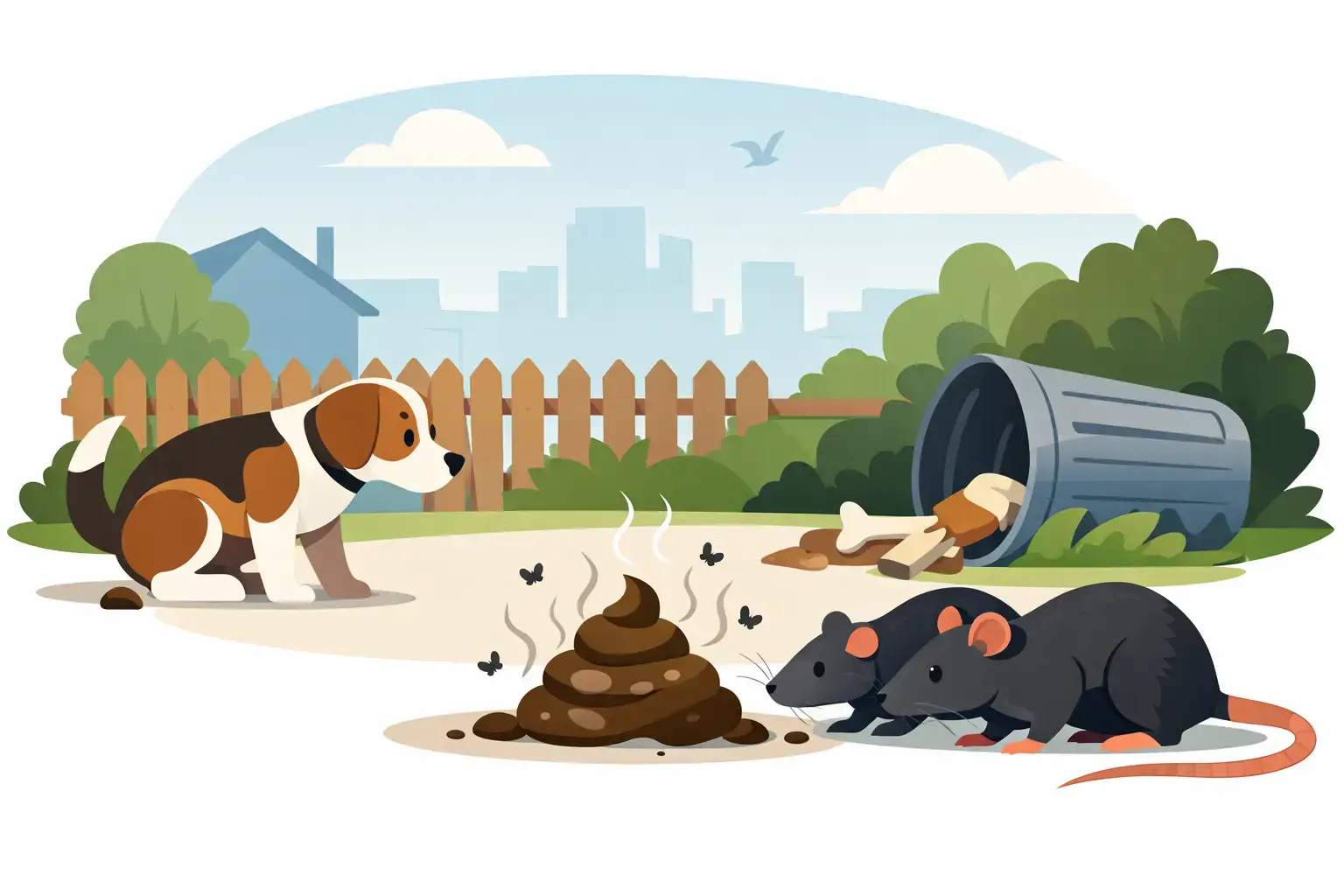
You step into the backyard to let the dog out, and everything seems fine – until you spot signs of rodents near the fence, shed, or trash area. It’s a fair question to ask: does dog poop attract rats? Yes, it can. Dog waste may not be the only thing bringing rats into a yard, but it can absolutely add to the problem by giving them a reason to stick around.
For busy families and homeowners, that matters more than most people realize. A few missed piles here and there might seem harmless, especially during a busy week, but leftover pet waste can contribute to odors, sanitation issues, and a yard that feels a lot less usable.
Does dog poop attract rats or just other pests?
Dog poop can attract rats, along with flies, insects, and other nuisance pests. Rats are opportunistic. They are always looking for easy food sources, cover, and places with limited disturbance. Pet waste can fit into that picture, especially when it builds up over time.
Not every rat is showing up because of dog poop alone. In many yards, the real issue is a combination of things: open garbage, bird seed, fallen fruit, pet food, standing water, and waste left on the lawn. Dog poop is one more signal that the area may offer food and shelter.
That’s the part many homeowners miss. Rats usually do not need one perfect attractant. They just need enough reasons to investigate.
Why dog waste can draw rats in
Rats are scavengers. They eat a wide range of organic material, and dog feces can become part of that food environment. This is especially true if the waste is fresh, plentiful, or mixed into a yard that already has other rodent-friendly conditions.
The smell plays a role. Dog waste has a strong odor that travels, especially in warm weather or after rain. While people notice it as unpleasant, rats experience it differently. It can signal the presence of edible material or a place where food scraps and other waste are nearby.
There is also the issue of routine. If a yard consistently has pet waste sitting out for days, it becomes a stable source of interest. Rats tend to return to places that offer reliable resources. One forgotten pile is less likely to create a serious issue than ongoing buildup across a week, a month, or an entire winter.
When the risk is higher
Some properties are simply more likely to have rodent problems than others. If dog waste is present in those spaces, it can make an existing risk worse.
Yards with lots of hiding spots
Rats prefer to move under cover. If your property has thick landscaping, overgrown grass, wood piles, brush, a shed with gaps underneath, or clutter along the fence line, rodents have more confidence moving through the area. Add pet waste to that setup, and the yard becomes more appealing.
Homes with multiple dogs
More dogs usually means more waste. If cleanup falls behind, even by a few days, the amount can become significant fast. This is one reason multi-dog households often notice odor and pest concerns sooner.
Winter and early spring buildup
In Michigan, winter can hide a lot. Snow cover makes cleanup harder, and many homeowners wait until spring to tackle the yard. By then, months of waste may be sitting there. That kind of buildup can create stronger odor, poorer sanitation, and more attraction for pests once temperatures rise.
Nearby food and water sources
Dog poop alone may not be what brings rats in first. But if your yard also has bird feeders, overflowing trash cans, compost, outdoor pet food, or standing water, waste can become part of a bigger pattern that supports rodent activity.
What dog poop does not do
It helps to be realistic here. Dog poop does not guarantee rats. A clean-looking yard can still have rodents because of neighboring properties, weather shifts, nearby construction, or easy access to shelter.
On the other hand, leaving waste in the yard increases the odds that your space feels inviting instead of ignored. Think of it less like flipping a switch and more like raising the welcome sign.
That distinction matters because it keeps the focus on prevention instead of panic. If you are dealing with rodents, removing dog waste is a smart step, but it should be part of a broader cleanup and maintenance plan.
Other problems caused by pet waste
Even if rats were not part of the conversation, regular waste removal still matters. Dog poop creates more than a cosmetic issue.
It can carry bacteria and parasites, produce strong odors, and make the yard less enjoyable for kids and pets. If you have children playing outside, guests visiting, or dogs that roam the property often, waste left behind turns a usable yard into a mess people try to avoid.
It can also affect shared or commercial spaces. For apartment communities, HOAs, and other properties, visible pet waste sends the wrong message quickly. People notice when outdoor areas feel neglected.
How to make your yard less attractive to rats
The good news is that small, consistent habits make a real difference. The goal is to remove what attracts rodents and make the property feel exposed and unwelcoming.
Pick up dog waste consistently
This is the biggest step. The longer waste sits, the more likely it is to contribute to odor and pest activity. Daily pickup is ideal, and at minimum, regular scheduled removal helps prevent buildup.
For many households, the challenge is not knowing what to do. It is having the time and staying on top of it every week. That is where routine matters.
Secure trash and outdoor food sources
Keep garbage lids tightly closed. Bring pet food bowls inside. Clean up spilled bird seed if you use feeders, and avoid leaving any edible waste outdoors longer than necessary.
Cut back hiding areas
Trim overgrown vegetation, clear brush, and remove clutter near fences, decks, and sheds. If rats have nowhere to hide, they are less likely to settle in.
Watch for moisture
Fix leaking spigots, remove standing water, and make sure drainage is working properly. Rats need water too, and damp corners make a yard more comfortable for pests.
Check structures around the yard
Sheds, garages, crawl spaces, and decks can all provide shelter. Look for holes, gaps, or easy entry points and seal them where possible.
Why regular cleanup works better than occasional cleanup
A one-time cleanup can help reset the yard, especially after winter or a period when things got behind. But if waste starts piling up again right away, the same issues return.
That is why recurring service is so useful for many homeowners. It takes a task that is easy to postpone and turns it into something handled on schedule. No contracts, no hassle, and no wondering when you will finally get around to it.
For families juggling work, school, errands, and everything else, pet waste cleanup often lands at the bottom of the list. That does not mean the problem stays small. It usually grows quietly until the smell gets worse, the yard becomes less pleasant, or pests start showing up.
A clean yard is not just about appearance. It is about making the space safer, more comfortable, and easier to enjoy.
So, does dog poop attract rats enough to worry about?
Yes, especially if it is allowed to build up. Dog waste is not always the sole cause of a rodent issue, but it can be a contributing factor that makes your property more attractive to rats than it needs to be.
If your yard is already dealing with clutter, food sources, or shelter spots, leaving dog poop behind gives rodents one more reason to visit. If your yard is otherwise well maintained, staying on top of pet waste helps keep it that way.
That is the practical takeaway. You do not need fear, and you do not need guesswork. You just need consistency.
For homeowners in Clio and nearby communities, that often means getting help with the chore most people do not want to do in the first place. Get Scooped MI is built around that simple idea: let us handle the mess so you can enjoy a cleaner yard.
If you have been wondering whether missed dog waste is contributing to pest problems, the safest move is also the simplest one – stop the buildup before it starts. A cleaner yard gives rats fewer reasons to come around, and gives your family more reason to use the space again.