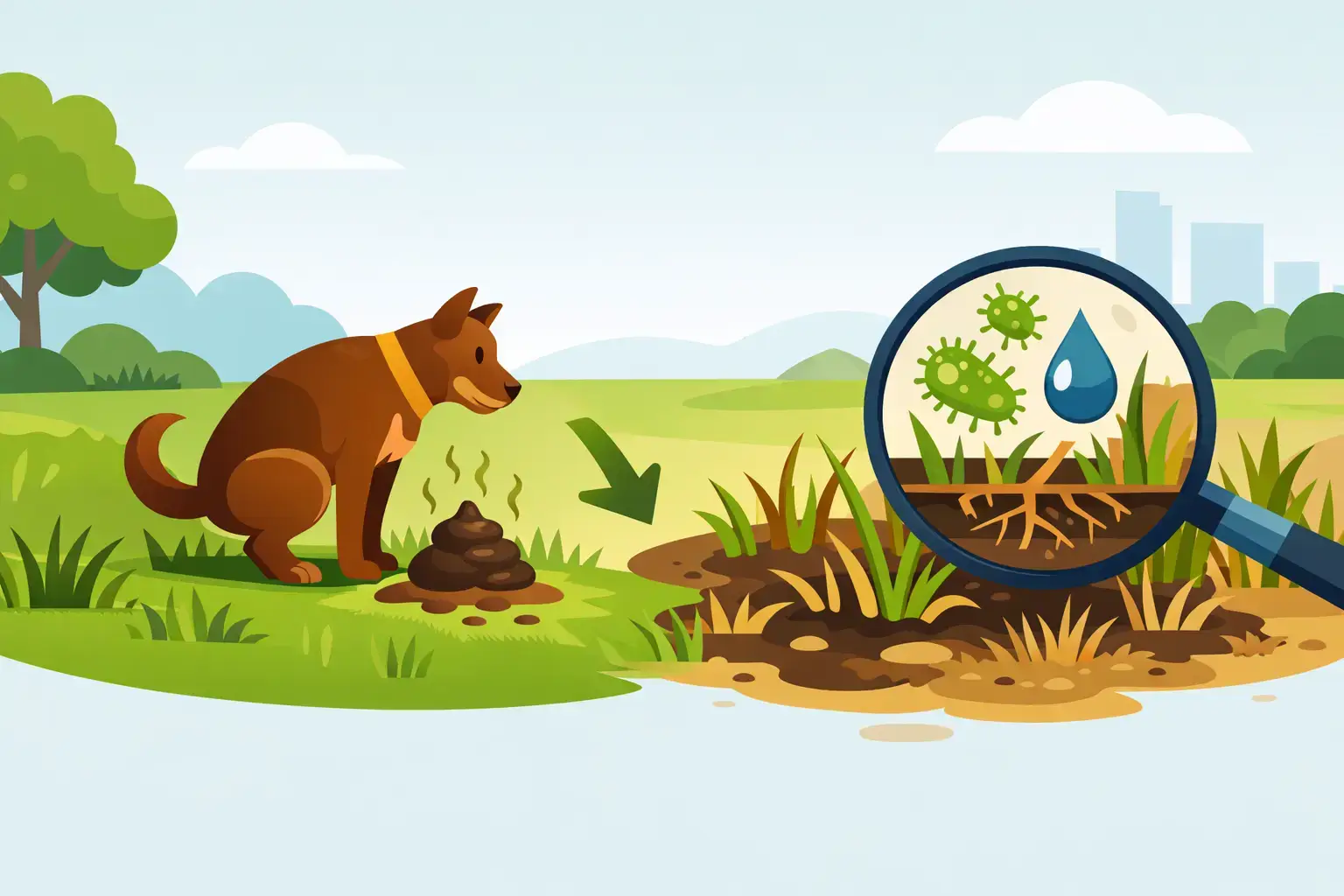
You can usually spot the problem before you step in it. A patchy lawn, a stubborn brown spot, and that smell hanging around the yard all point to the same question: is dog waste bad for grass? In most cases, yes. Dog waste can damage your lawn, throw off the balance of your soil, and make your outdoor space less safe and less enjoyable for your family and pets.
A lot of homeowners assume dog poop works like fertilizer because manure from cows or chickens is used that way. Dog waste is different. It is not the kind of natural lawn booster people hope it is, and letting it sit in the yard usually creates more problems than benefits.
Why is dog waste bad for grass?
The biggest issue is concentration. Dog waste contains organic matter, bacteria, and nutrients that break down in a way your lawn does not always handle well. Instead of feeding the grass evenly, it can smother blades underneath it and create hot spots in the soil.
When waste sits too long, it blocks sunlight and traps moisture unevenly. The grass under it can weaken, yellow, or die back. If you have multiple dogs or a smaller yard, the damage tends to show up faster because the same areas get hit again and again.
There is also a simple volume problem. One missed pile may not ruin a whole lawn, but when cleanup gets delayed for days or weeks, those piles add up. That is when many families start noticing bare patches, stronger odors, and a yard that feels less usable.
Dog poop is not the same as manure
This is where a lot of lawn myths start. Farm manure is often composted properly before being used, and animals like cows have very different diets and digestive systems. Dog waste is not treated the same way, and it should not be thought of as a ready-made fertilizer.
Dogs eat protein-rich diets that produce waste with different characteristics than grazing animals. That waste can carry harmful bacteria and parasites, and it does not break down into something your yard can safely use on its own. Even when it eventually decomposes, the process is messy, slow, and not especially helpful for a healthy lawn.
If you leave it in place thinking nature will handle it, your grass often pays the price first.
What dog waste does to your yard over time
At first, the effects may seem minor. A pile sits for a few days, maybe longer after rain or snow, and then it starts to flatten out and blend into the lawn. That can make it seem like the problem is going away. It is not. The waste is still there, working its way into the grass and soil.
Over time, buildup creates a lawn that feels harder to maintain. Mowing gets more unpleasant. Kids avoid parts of the yard. Pets track mess back inside. The smell gets worse in warm weather, and after winter, the first thaw can reveal a season’s worth of forgotten cleanup.
That last part matters in Michigan. Snow cover has a way of hiding the problem until spring, when homeowners suddenly find piles everywhere and grass underneath that looks stressed, matted, or dead in spots.
Does dog waste kill grass or just stain it?
It depends on how long it sits, how often the same area is used, and the condition of your lawn to begin with. Sometimes dog waste leaves temporary yellowing that recovers once the waste is removed and the area is watered. Other times it creates dead patches that need reseeding.
A thick, healthy lawn may bounce back better than a thin or already struggling one. Wet weather can spread the mess into the soil more quickly, while hot weather can intensify odor and stress the grass further. If you have multiple dogs, repeated exposure often turns a small issue into a lawn care problem.
So yes, dog waste can kill grass in certain spots, but even when it does not fully kill it, it can still weaken the lawn and leave it looking rough.
Is dog waste bad for grass if it decomposes naturally?
Yes, because natural decomposition is not the same as safe cleanup. Dog poop does break down eventually, but slowly, and not in a clean way that helps your lawn. During that process, it can continue to expose the area to bacteria, smell, and lawn damage.
Rain does not solve the problem either. It can spread contaminants through the yard instead of removing them. That means the waste may affect more than the exact spot where it landed.
This is one reason regular pickup matters so much. The sooner waste is removed, the less time it has to press into the lawn, break apart, and create lasting issues.
The lawn problem is only part of it
Most homeowners are asking about the grass, but the bigger picture is your whole yard. Dog waste attracts flies, adds odor, and creates sanitation concerns in places where people and pets spend time. If you have children playing outside or guests over for a cookout, a dirty yard quickly becomes more than just a cosmetic issue.
For commercial properties, apartment grounds, and shared outdoor spaces, the standard is even higher. Residents and visitors notice when pet areas are not kept clean. Beyond appearances, unmanaged waste can hurt the overall experience of the property.
That is why routine cleanup is less about perfection and more about keeping the space consistently usable.
What to do if dog waste has already damaged your lawn
First, remove all waste as completely and consistently as possible. If piles are left behind while you try to repair the grass, you are working against yourself. Once the yard is clean, lightly rinse affected spots and assess the damage over the next week or two.
If the grass is only flattened or lightly yellowed, it may recover with watering and time. If you see bare soil or areas that do not improve, you may need to reseed or patch those spots. Lawns recover better when they are not dealing with fresh waste every few days.
It also helps to watch patterns. Many dogs return to the same areas, especially along fence lines or certain corners of the yard. Knowing where the buildup happens can help you stay ahead of it.
The easiest way to protect your grass
The best fix is simple: do not let dog waste sit. Prompt pickup reduces lawn damage, cuts down on odor, and makes the whole yard easier to enjoy. For some families, that means scooping daily or every few days. For others, especially homes with multiple dogs or busy schedules, that routine is hard to keep up with.
That is where regular service makes a real difference. A dependable cleanup schedule helps prevent buildup before it turns into brown patches, springtime overload, or a yard no one wants to use. It is one of those chores that feels small until it is not.
For local homeowners, families, and property managers, services like Get Scooped MI take that job off the list with straightforward, recurring visits and no hassle. The main benefit is not just a cleaner lawn. It is having your yard ready for everyday life.
A clean yard gives your grass a better chance
No lawn is perfect, especially with dogs. Some wear and tear is part of having pets, and most dog owners are happy to trade a little turf trouble for a good dog and a busy backyard. But leaving waste behind is one problem you can actually control.
When the yard stays clean, your grass gets more sunlight, more airflow, and a better chance to recover from normal pet traffic. The space smells better, looks better, and feels more welcoming for everyone using it.
If your lawn has been looking rough lately, the answer may be simpler than a major lawn treatment plan. Start with the mess you can remove, and your grass will have a much better shot at staying green.