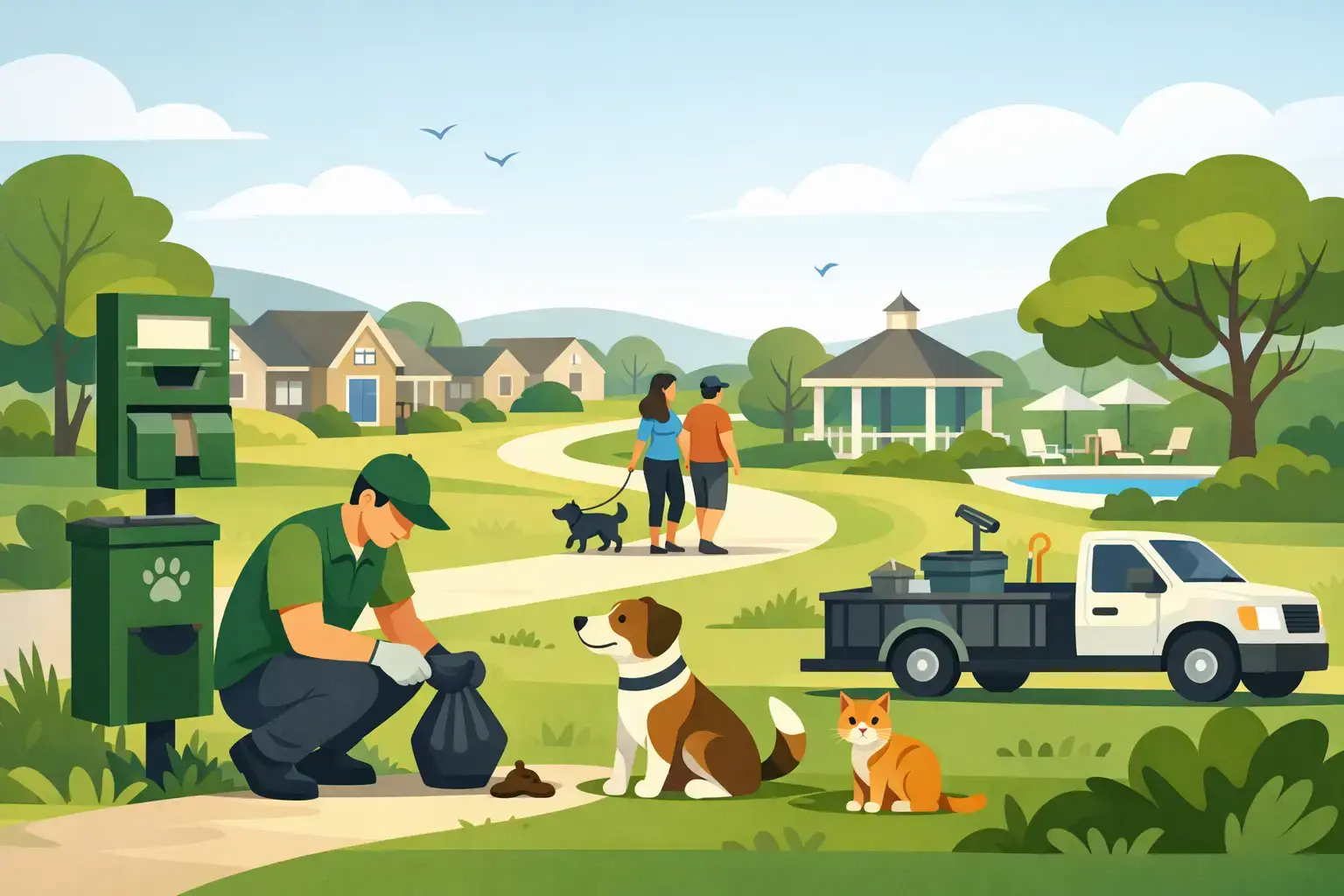
A neighborhood can have great landscaping, clean sidewalks, and nice common areas, but if dog waste keeps showing up in the grass, along walking paths, or near mailboxes, that is what people remember. Pet waste removal for HOA communities solves a problem that residents notice right away because it affects how the property looks, smells, and feels every day.
For HOA boards and property managers, this issue is rarely just about appearance. It turns into resident complaints, maintenance headaches, awkward rule enforcement, and ongoing pressure to keep shared spaces sanitary without adding more work to the management team. A dependable cleanup plan takes one recurring frustration off the table.
Why pet waste becomes an HOA problem fast
In a single-family yard, waste is one household’s responsibility. In an HOA, the problem spreads across shared green space, pet relief areas, trails, retention pond edges, and other common-use spots. Even when rules are clear, not every resident follows them consistently.
That creates a familiar cycle. A few missed pickups lead to visible buildup. Buildup leads to more residents ignoring the rules because the area already looks neglected. Then the complaints start. Parents do not want kids stepping in it. Dog owners do not want their pets sniffing around contaminated grass. Maintenance crews do not want to mow through it.
The longer it sits, the worse the experience gets. Odor increases, the property looks less cared for, and common areas become less enjoyable. For communities that work hard to protect curb appeal and resident satisfaction, that is a real operational issue, not a small annoyance.
What HOA pet waste removal service actually covers
Professional pet waste removal for HOA properties usually focuses on the places where residents and dogs regularly gather. That can include dog stations, open lawns, walking routes, perimeter strips, playground-adjacent grass, and designated pet areas.
The goal is simple – keep the property usable and clean on a consistent schedule. Depending on the size of the community and the number of dogs on site, service may be weekly, multiple times per week, or adjusted seasonally. Some communities also need one-time cleanups after winter, when snowmelt reveals months of missed waste.
This kind of service is especially helpful when no one on the HOA side has the time or desire to monitor every pet area personally. Instead of reacting to complaints, the board or manager can put a routine in place and know the problem is being handled.
Common areas that need the most attention
Not every HOA has the same layout, so cleanup plans should match the property. A townhome community with compact shared lawns has different needs than a large neighborhood with walking trails and multiple pet stations.
The trouble spots are usually predictable. Areas near entrances, sidewalks, and apartment-style green spaces tend to collect the most waste because they are convenient for quick dog walks. If a property has a fenced dog run, that area may need more frequent service than the rest of the grounds.
The biggest benefits for boards and property managers
The most obvious benefit is cleaner grounds, but that is only part of it. Consistent cleanup also reduces friction between residents and management. When the HOA is seen as responsive and proactive, complaints often decrease.
There is also a practical maintenance benefit. Landscapers and lawn crews can do their work more efficiently when they are not working around pet waste. That matters more than many communities expect. A property can spend good money on mowing and grounds care, but if waste is left behind, the area still feels dirty.
A cleaner property also supports resident retention and community reputation. People want to enjoy walking their dogs, letting kids play outside, and spending time in shared outdoor space without worrying about where they step. In competitive housing markets, small quality-of-life details can shape how residents feel about where they live.
Health and sanitation matter too
Dog waste is not just unpleasant. Left in common areas, it can attract flies, create odor, and contribute to an unsanitary environment. After rain, residue can spread into surrounding grass and hard surfaces. During mowing, it can make a mess of both equipment and walkways.
No service eliminates every sanitation concern on a property, and resident cooperation still matters. But routine removal is a practical step that helps reduce the daily impact of waste buildup in shared spaces.
Why enforcement alone usually falls short
Most HOAs already have rules about pet cleanup. The issue is not usually the lack of a rule. It is the gap between the rule and real-world behavior.
Residents may forget bags, assume someone else will handle it, walk dogs after dark, or simply ignore the policy. Fines can help in some communities, but they are hard to enforce consistently unless there is clear evidence. That means management often spends time chasing violations without fully solving the problem.
A service-based approach works differently. It does not replace community rules, but it supports them. Signage, pet stations, and reminders still have value. The difference is that the HOA is no longer relying on perfect resident behavior to keep the property in shape.
Choosing the right pet waste removal for HOA needs
The best fit is not always the cheapest option or the most complicated one. What matters most is reliability, communication, and a service plan that matches the property.
A good provider should be able to explain how often they recommend cleanup, what areas are included, how they handle access and scheduling, and what happens if the community needs extra attention during certain seasons. Spring cleanups can be especially important in Michigan, where winter buildup becomes a bigger issue once the snow clears.
It also helps to work with a company that understands local properties and local expectations. HOA managers do not need fancy promises. They need straightforward service, dependable visits, and clear pricing. No contracts and no hassle can be a real advantage here, especially for communities that want flexibility while they evaluate what schedule works best.
Questions worth asking before you hire
It makes sense to ask how service frequency is determined, whether common areas and dog stations are both included, and how seasonal cleanups are handled. You may also want to ask how the provider documents service and whether they can adapt if resident use increases.
The right answer is not always the same for every property. A small HOA may do well with weekly service. A larger pet-friendly community may need more frequent visits. It depends on dog density, layout, and how much resident traffic shared spaces get.
Setting resident expectations after service begins
Hiring a cleanup service does not mean residents can stop picking up after their dogs. That message needs to stay clear. The service is there to maintain common areas, not to encourage careless behavior.
The best outcomes happen when the HOA treats cleanup service as one part of a broader plan. Residents should still have access to waste stations, reminders, and posted expectations. When those pieces work together, the neighborhood stays cleaner between visits and service results are more noticeable.
This is also where communication helps. Let residents know what the service covers, how often it happens, and why the HOA made the investment. People are more likely to appreciate and support a solution when they understand it is there to keep the community cleaner, safer, and more enjoyable for everyone.
A simple fix for a very visible problem
Pet waste issues have a way of making a well-kept community feel poorly managed, even when the board is doing plenty of things right. That is why this service tends to deliver value beyond the task itself. It removes one of the most visible everyday annoyances from shared living spaces.
For HOA boards, property managers, and neighborhood operators, professional pet waste removal is often less about adding a new vendor and more about removing a recurring source of complaints. A local company like Get Scooped MI can help communities stay ahead of the mess with dependable service that fits real-world schedules and budgets.
When outdoor spaces are cleaner, people use them more, complain less, and feel better about where they live. That is a small operational win that residents notice almost immediately.