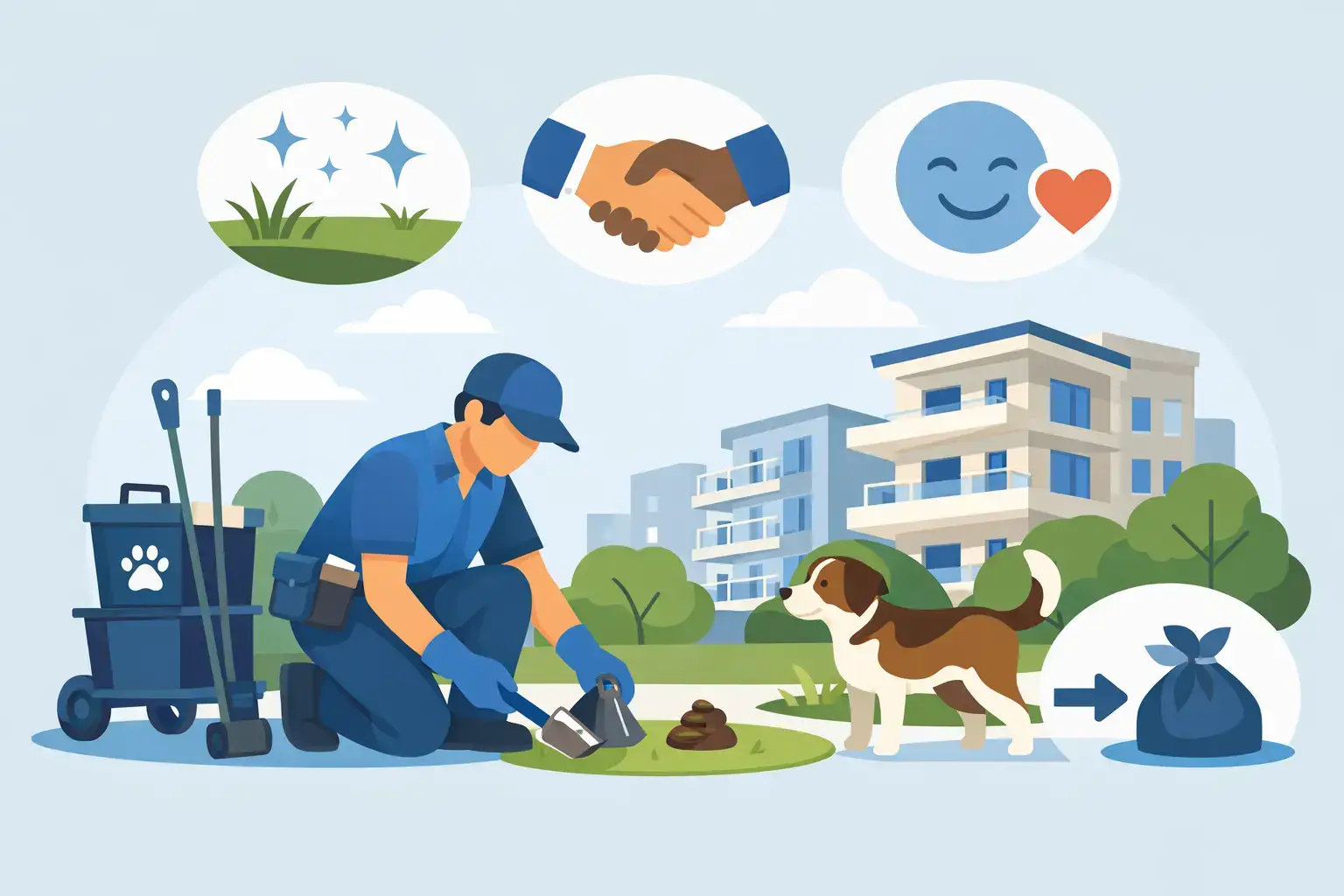
A single missed cleanup station can change how an apartment community feels. What should be a quick walk with the dog turns into a frustrating obstacle course for residents, and for property managers, small messes can quickly become bigger complaints. That is why an apartment dog waste cleanup service is not just a nice extra. In many communities, it is part of keeping the property clean, usable, and welcoming.
Why apartment communities need dog waste cleanup service
Dog-friendly apartment living is a major draw for renters, but it comes with real maintenance demands. Shared green spaces, dog relief areas, walking paths, and common lawns all get heavy use. When waste is left behind, residents notice right away. They smell it, step around it, and start wondering whether management is staying on top of the property.
The issue is not only appearance. Uncollected dog waste can create sanitation concerns, attract pests, and make outdoor areas less enjoyable for families and pet owners. In a multi-unit setting, one resident neglecting cleanup can affect dozens of neighbors. That makes regular service more than a convenience. It becomes part of routine property care.
A dependable cleanup schedule also helps take pressure off maintenance teams. Apartment staff already have enough on their plate with work orders, grounds upkeep, turnovers, and resident concerns. Adding pet waste pickup to that list often means it gets handled inconsistently, especially during busy weeks or bad weather.
What an apartment dog waste cleanup service actually does
At its core, this service is simple. A professional crew visits the property on a set schedule and removes dog waste from designated areas. That may include relief stations, grassy strips between buildings, dog runs, perimeter walking areas, or other shared outdoor spaces where pets are commonly walked.
For many apartment communities, recurring service is the best fit because the problem is recurring. Weekly visits are common for busier properties, while some smaller communities can manage well with bi-weekly service. It depends on the number of dogs on site, the size of the grounds, and how much resident traffic outdoor spaces get.
Some providers also offer one-time cleanups. These can be useful after a lapse in maintenance, before a property showing, after winter thaw, or when a community is getting ready for a seasonal refresh. A spring cleanup is especially helpful in Michigan, where snow cover can hide months of buildup and leave properties looking rough once it melts.
The biggest benefits for property managers
The most obvious benefit is cleaner grounds, but the real value goes further than that. When outdoor areas are consistently maintained, the entire property feels more cared for. Residents notice the difference, even if they never think about the service itself.
A cleaner property can help reduce complaints. That matters because dog waste complaints tend to repeat. Once a few problem spots develop, residents start contacting the office more often, and staff spend time responding instead of focusing on larger priorities. Regular cleanup helps stop that cycle before it starts.
There is also a resident satisfaction factor. Pet owners want a community that welcomes dogs, but they do not want that to mean dirty sidewalks and smelly common areas. Non-pet owners feel the same way. Clean grounds make it easier for everyone to enjoy the property.
An apartment dog waste cleanup service can also support leasing efforts. Prospective residents pay attention to first impressions. If the lawn near the front building or dog area looks neglected, it sends the wrong message. On the other hand, a tidy property suggests consistent management and pride in upkeep.
It is not one-size-fits-all
Not every apartment community needs the same level of service. A small complex with a handful of dogs has different needs than a large pet-friendly property with multiple buildings and a dedicated dog park. That is why flexible scheduling matters.
Some communities need weekly visits year-round. Others may need more frequent attention during warmer months and less during colder periods. Properties with a lot of foot traffic, limited green space, or a high concentration of pet owners often benefit from tighter service intervals.
Budget is part of the conversation too. Property managers have to balance cleanliness with operating costs, and that is fair. The good news is that routine service is often more affordable than people expect, especially compared with the time costs of pulling maintenance staff away from other work or dealing with repeated resident complaints.
The right setup usually comes down to a simple question: how much use do the outdoor pet areas get, and how quickly do they become a problem if they are not cleaned?
What to look for in a cleanup provider
Reliability should be at the top of the list. If a service is inconsistent, the property does not stay clean, and the problem returns fast. Apartment communities need a provider that shows up on schedule and handles the work thoroughly.
Clear communication matters too. Property managers do not want to chase down updates or wonder whether service was completed. Straightforward scheduling, simple quoting, and easy contact go a long way.
It also helps to work with a company that understands local conditions. In Michigan, weather affects everything from access to scheduling to seasonal buildup. A local provider is more likely to understand how to keep service practical through changing conditions and when a spring cleanup or adjustment in frequency makes sense.
Professionalism is another big factor. This is a messy job, but it should still be handled with care. That means respectful service around residents, attention to shared spaces, and disposal practices that are responsible and clean.
Why recurring service usually works best
A one-time cleanup can solve an immediate problem, but recurring service prevents the same issue from coming back week after week. For apartment communities, prevention is usually the smarter move.
When service is scheduled consistently, dog waste never gets the chance to pile up. That keeps odors down, improves the look of the grounds, and helps outdoor spaces stay usable. It also creates a more predictable maintenance routine for management.
This matters even more in family-oriented communities. Parents want grassy areas where kids can play without constant worry. Pet owners want to walk their dogs without dodging old messes. Regular cleanup helps protect those everyday moments that shape how residents feel about where they live.
For many properties, dependable weekly or bi-weekly visits are the sweet spot. It keeps the community looking cared for without creating extra hassle for staff.
A better experience for residents and staff
Good property management is often about removing little frustrations before they grow. Dog waste may seem like a small issue compared with major maintenance problems, but residents deal with it up close. They see it on their walks, near mail areas, around sidewalks, and in shared green spaces.
When those spaces stay clean, the property feels easier to live in. Residents are more comfortable using the grounds, staff spend less time fielding complaints, and management can focus on the bigger picture.
That is one reason services like this make sense for apartment communities that want practical results without adding more work internally. A company like Get Scooped MI can step in, keep the schedule simple, and handle a job most teams would gladly take off their list.
Clean pet areas send the right message
Dog-friendly living works best when it is backed by real upkeep. Residents want policies that make sense, but they also want outdoor spaces that are clean and pleasant to use. A property can allow pets and still keep standards high.
That balance is where an apartment dog waste cleanup service delivers real value. It supports sanitation, improves curb appeal, and helps protect the day-to-day experience residents expect from a well-managed community. For property managers, it is a straightforward way to solve an ongoing problem without contracts, hassle, or added strain on the team.
Sometimes the best property improvement is not flashy. It is simply taking an unpleasant chore off the table so the whole community can enjoy a cleaner space.